What’s a good VO2 max for me? Your aerobic fitness explained
VO2 max is the number that describes your cardiorespiratory fitness. It’s a single number that captures your heart, lungs, circulatory system, and muscle cells working independently and together. And not surprisingly, your VO2 max is connected to health, performance and longevity.
At the same time, many people find VO2 max difficult to understand on their Garmin smartwatch. Why? Maybe mixing letters, numbers and abbreviations together makes things look scary and complicated. Let’s skip that problem for a moment. If you are really interested in fitness, then you will be fine with a funny name.
And in case you were wondering, it is pronounced vee oh two max.
Ask a physiologist about VO2 max, and they will explain that it is the maximum volume of oxygen your body can import, transport and use in a single minute during intense physical activity. If that rings a bell, then great. If not, don’t worry. We’re going to explain why VO2 max matters and how you can make sense of your own.
Why VO2 max matters
Exercise physiologists have studied how the human body uses oxygen for a long time. And the history of VO2 max as a performance metric dates back more than 100 years. Scientists observed that people are always using some oxygen — even at rest. Start moving around or exercising and your body starts to use more and more oxygen as the intensity increases.
Why does your body need oxygen? Oxygen is the magic ingredient that makes aerobic energy production possible. That means transforming the energy stored in macronutrients such as carbohydrates and fats into fuel for your muscle cells. That is why VO2 max is sometimes referred to as your aerobic capacity. It is also why endurance athletes spend a lot of time working to improve their VO2 max.
To directly measure oxygen consumption, you need to wear a special mask together with a machine capable of analyzing the contents of your respiratory gases. The goal is to measure how much oxygen is in the air you breathe in compared to how much oxygen is in the air you exhale. The difference is how much oxygen your body is using.
VO2 max tests are typically performed in a laboratory and involve running on a treadmill. The speed or incline of the treadmill increases gradually until you reach the intensity at which maximum oxygen consumption rate is achieved. It is quite a workout and should only be performed when healthy.
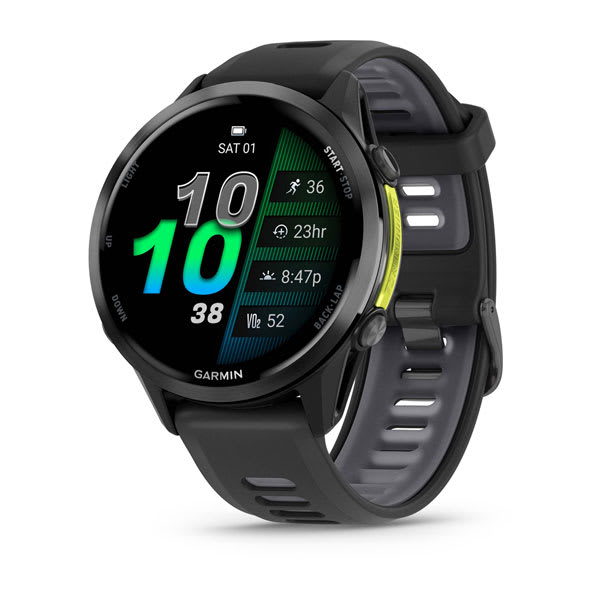
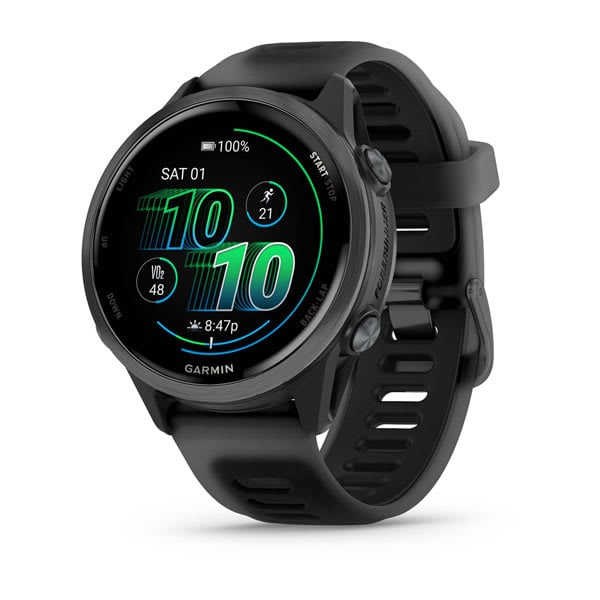
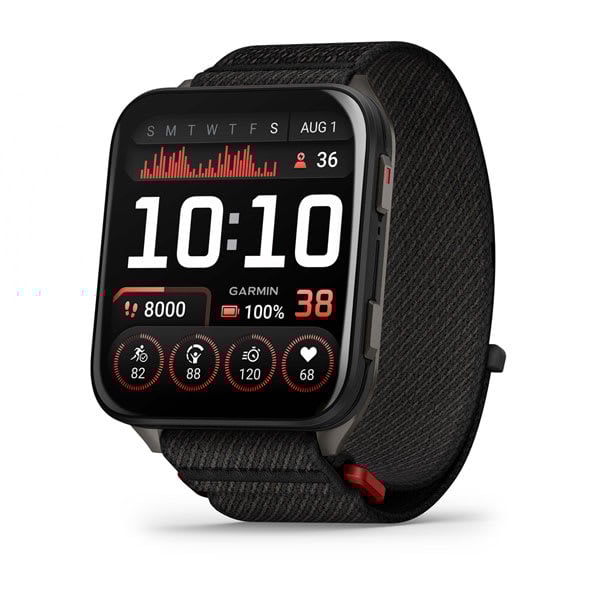
Compatible Garmin smartwatches automatically estimate VO2 max during walking and running activities using advanced analytics that interpret combinations of heart rate and performance data to reveal your aerobic capacity. This means looking at how quickly you are walking or how fast you are running compared to how hard your body is working to keep up the pace. The method can also be used for cycling if you mount a power meter on your bike.
Understanding VO2 max
The first thing to understand is that a higher VO2 max is better than a lower VO2 max. A higher VO2 max means that your body is better at taking oxygen from the air and using it in your muscles. The more oxygen your muscles can get, the more nutrients you can aerobically transform into the energy your muscles use to perform. This is important because your aerobic metabolic pathways are by far your most efficient source of energy for your body. Plus, a higher VO2 max is associated with a reduced risk of heart disease, diabetes, cancer and stroke, according to Harvard Health Publishing.
Higher is better than lower, got it. But how high is high enough?
If you are a competitive marathon runner, triathlete, cyclist or cross-country skier, then the answer is really, really high. Top endurance athletes practically dedicate their lives to improving their VO2 max.
For most people, however, a good VO2 max is understood in terms of so-called normal values. These are the ranges of VO2 max that researchers have identified in the general population. This is where things can get tricky. Similar VO2 max results can mean different things for different people.
A VO2 max of 40 can be excellent for one person, good for another and only poor for a third. What? The missing context here is that the first person is a 28-year-old woman, the second is a 42-year-old man and the last is a 20-year-old male.
Making sense of VO2 max requires personal context. That is the challenge. Luckily, you can see what percentile your VO2 max is in for your age and gender in the Garmin Connect™ app.
VO2 max for men vs. women
Variation in physical performance between men and women mostly comes down to differences in body composition. Research shows that men typically have more lean muscle mass than women. And women tend to naturally accumulate more fatty tissue. These natural differences in average body composition are important for understanding what your personal VO2 max means. Muscles use oxygen while fat is simply stored energy.
So, for a given body weight and all other things being equal, a man will likely have a higher VO2 max due to more muscle mass available to use oxygen. Men, on average, have higher VO2 max values than women (though men may see a more pronounced decline in their VO2 max as they age). A top female endurance athlete will have a much higher VO2 max than the average male. However, she will likely have a lower VO2 max compared to a top male endurance athlete.
What’s a good VO2 max for my age?
Our performance tends to get worse as we get older. A study published in the Journal of the American Heart Association found VO2 max values peaked around age 30 before declining at a growing steepness.
Fitness — as measured by VO2 max — typically declines between 5%-10% per decade. Cardiorespiratory fitness losses can be managed through healthy lifestyle choices and regular physical activity. Past the age of 70, fitness levels decline even more quickly.
Several factors contribute to age-related fitness declines. One is the fact that total body mass or weight tends to increase as we get older, but lean muscle mass decreases. Another is that our muscles work less efficiently. This affects the large muscles that power our movement and the heart.
As we get older, our hearts simply cannot beat as fast as when we were younger. The force with which the heart beats to push oxygenated blood to the muscles also decreases.
The good news about VO2 max and aging is that for the most part accelerated fitness declines resulting from sedentary lifestyles can be reversed. This means that with proper care you can improve your fitness and feel younger and more energetic in the process.
What about my weight?
Weight management and fitness topics often go together and for good reason. Both are good health indicators and both benefit from healthy lifestyles. And, because VO2 max is usually presented relative to body mass, losing body fat will increase your VO2 max.
When you get your VO2 max from a Garmin smartwatch, the number you see is what exercise scientists call your relative VO2 max. That number is how much oxygen you can use per minute per kilogram of body weight, meaning your body weight is already factored into the equation.
If you are curious about your absolute VO2 max, you can easily calculate it. Simply multiply the VO2 max shown on your watch by your body weight measured in kilograms. The absolute number is your total peak “horsepower,” but remember, a lighter car with the same horsepower is faster.
Take the first step toward building your aerobic capacity today by browsing our collection of fitness smartwatches.