Do I need a power meter? The case for functional threshold power
Adding a power meter to your bike unlocks a world of new insights and perspectives. And while power meters offer a lot of data, one metric stands out: functional threshold power (FTP). From an endurance perspective, FTP represents the most critical aspect of your performance capacity and helps dial in your efforts with customised training zones.
We’ll help you understand what FTP is, how it differs from VO2 max, the science behind it, how you can find yours and how you can improve your FTP.
What is functional threshold power?
FTP is the highest power output, measured in watts, that you can sustain without rapidly fatiguing. This definition comes from Andrew Coggan, Ph.D., an early advocate of power-based training.
Well-trained cyclists can typically maintain FTP-level output for around an hour, though this varies by the individual. Fatigue can accumulate rapidly when your power output exceeds your FTP. Reduce your power output even slightly below your FTP and you may be able to keep going for longer.
It’s worth noting that FTP can be expressed in both absolute and relative terms. In absolute terms, your FTP is the total wattage of your power output. Relative expressions of FTP frame this insight as a power-to-weight ratio (watts per kilo of body weight). The ability to sustain higher power at lower body weights is an important predictor of success in races that involve major climbs.
What’s the difference between FTP and VO2 max?
What about VO2 max? VO2 max and FTP share an important relationship in the pantheon of performance metrics. VO2 max is the number that describes your maximum capacity for aerobic energy production. FTP, on the other hand, captures your ability to sustain higher intensities relative to your maximum aerobic capacity.
For two cyclists with similar VO2 max scores, the rider with the higher FTP may generally have an advantage in competitive settings. And just like VO2 max, FTP can be improved with targeted training methods.
Physiology and the science behind FTP
The scientific basis for FTP offering useful insight is metabolic in nature. It connects what you do on your bike to what is happening inside your body.
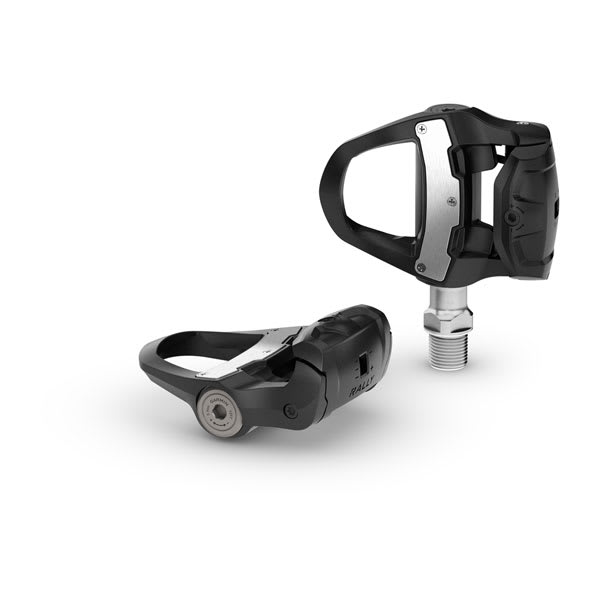
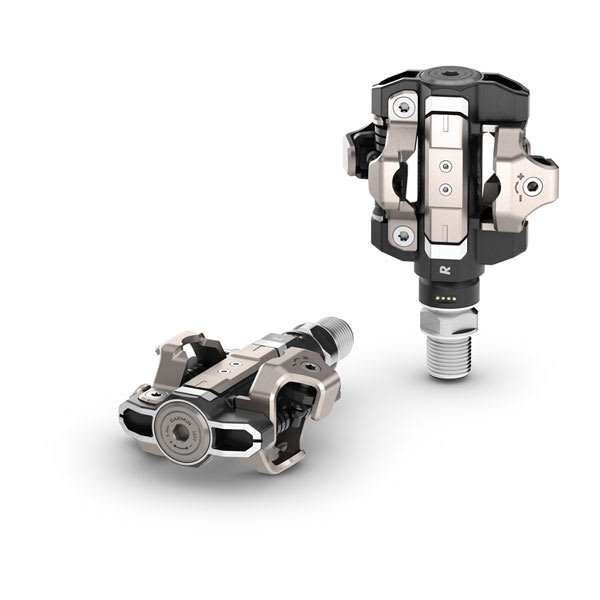
A power meter quantifies performance by measuring energy transfer over time in terms of watts — one joule per second to be precise. Rally™ power meters can determine the force you’re producing right at the pedals, allowing you to compare the force generated between different bikes — regardless of variations in cadence, power and cranks between bikes.
But where does the energy that powers your muscle contractions come from? It’s the result of breaking down adenosine triphosphate (ATP) molecules, a biological resource often called the fuel of life.
Your body maintains a limited supply of ATP that’s consumed quickly during physical activity. To keep going, your ATP production rate needs to match the energy demand of your performance.
The ATP you use when cycling is mostly produced aerobically, meaning oxygen was available and used in the process. Aerobic creation of ATP is efficient but limited by the ability of your heart, lungs and circulatory system to import oxygen from the atmosphere and transport it to your muscles.
When you need more energy than can be produced with the available oxygen, the ATP needed to make up the difference comes from anaerobic energy pathways — and this can lead to fatigue.
When glucose molecules are broken down for fuel, anaerobic metabolism produces a byproduct called lactate (small amounts of which are always present in your blood supply). The concentration of lactate rises when you exercise and increase the intensity of your performance. Some lactate molecules become fuel for aerobic energy production, while your circulatory system clears other lactate molecules from your working muscles to be remade as glucose in your liver.
Continue to increase the intensity of your performance and eventually the rate of lactate production will eclipse your ability to clear it away, so it accumulates. This can result in reaching your lactate threshold, where you may notice fatigue setting in faster.
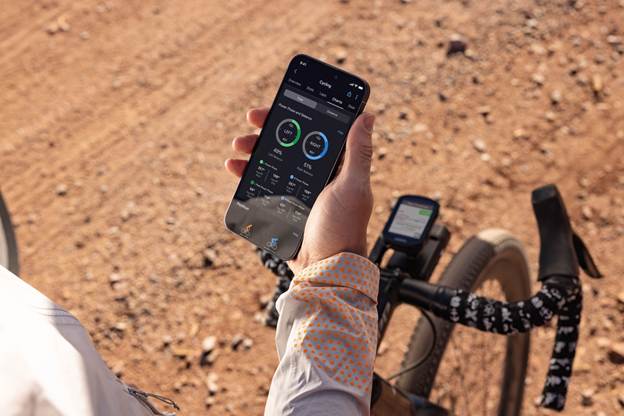
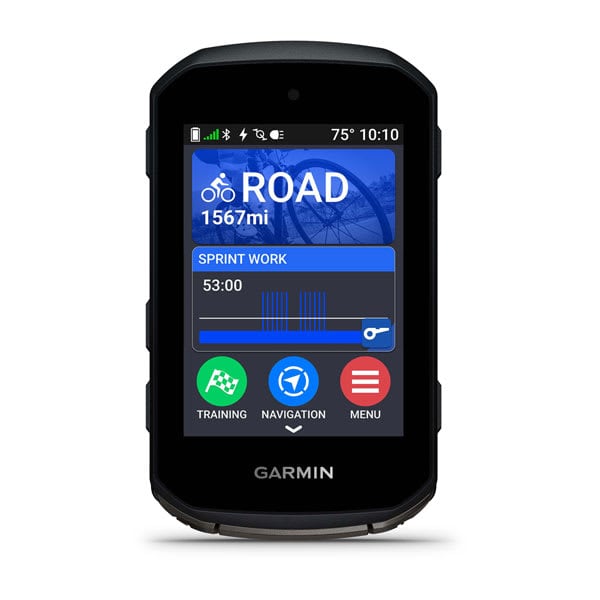
Garmin power meters provide a wealth of data, including left and right balance as well as FTP.
How to find your FTP
FTP tests can help estimate the point at which the energy demand results in more lactate production than your circulatory system can clear away. A traditional approach may require taking blood samples during exercise and analysing them in a laboratory.
Experienced cyclists typically reach the lactate threshold at a higher percentage of VO2 max compared to untrained cyclists. This difference is generally the result of improved aerobic energy production achieved through training.
With Garmin’s auto FTP feature, you don’t have to worry about a 60-minute time trial, 20-minute test or a ramp with increasing intensity. Select Garmin cycling computers and multisport watches can estimate your FTP during any cycling activity you record that includes enough time spent at different intensities, above and below your FTP. This method uses a combination of heart rate, heart rate variability and power data, so you need to have a heart rate monitor and a Rally 110/210 power meter paired with your Garmin head unit or compatible smartwatch. Plus, this improves your recommendations from Garmin Cycling Coach and daily suggested workouts.
How can I improve my FTP?
Increasing your FTP means boosting your tolerance for high-intensity performance. After establishing your FTP, Garmin Cycling Coach will use it to fine-tune your workout intensity and target specific training outcomes.
To get the full benefit of more targeted specialty workouts, you’ll need to build a strong, well-balanced foundation. Long, low-intensity aerobic training sessions set the stage for FTP-focused workouts by building muscular and cardiorespiratory endurance. Anaerobic and sprint training sessions enhance neuromuscular coordination and grow absolute maximum power output capacity — both of which improve overall cycling efficiency.
How you challenge yourself determines your results. This is known as the specificity principle of training. Tackling a hard challenge tells your body that it’s time to adapt to make similar challenges easier in the future. These adaptations happen in the recovery period after a challenge. Then, rinse and repeat: Repeating this cycle of loading and recovery helps you improve performance over time.
To improve your ability to tolerate high-intensity efforts, you need to strain your body with high-intensity efforts. Interval workouts are widely used to target both VO2 max and FTP development. That’s because punctuating higher intensity segments with periods of lower intensity activity allows you to perform more high-intensity work than you would in a workout built around a single continuous exertion.
VO2 max level intensity can typically only be sustained for several minutes. As a result, VO2 max targeting interval workouts typically feature shorter, higher intensity intervals. Because VO2 max-focused workouts involve pushing yourself above and beyond FTP intensities, these rides can have a positive impact on your ability to tolerate high-intensity performance.
Workouts designed to target FTP improvement often involve pushing yourself at FTP-level intensity for longer intervals. The extended duration of these intervals means you’ll also need longer recovery periods, and you will perform fewer of them during a ride.
Training to improve your FTP is both mentally challenging and physically exhausting, so avoid scheduling high-intensity workouts on consecutive days and give yourself plenty of time to recover.
How Garmin can help you train
If you’re not sure what type of workout would be best for you today, you can always check the daily workout suggestion on your Garmin device for an ideal training session based on your current fitness level, recent training activities and recovery levels. Even daily stress levels and sleep quality are considered in your workout suggestion when using select Garmin devices with 24/7 lifestyle tracking capabilities.
If you train with Rally™ 110 and 210, you get a versatile power meter that easily transfers between bikes and pedal bodies and accurately tracks performance metrics to help you fine-tune your training on every bike and ride. Our single-sensing power meter pedals, Rally 110, and our dual-sensing power meter pedals, Rally 210, provide essential data such as power and cadence within 1% accuracy. With Rally 210, you can also access advanced cycling dynamics including seated/standing position, power phase, platform center offset (PCO), and right/left balance.
When paired with a compatible Garmin cycling computer or smartwatch, Rally 110 and 210 also feature force data measurements for greater insights on the relationship between your power and cadence,.
Start optimising your rides today with a Garmin power meter.