What is Body Weight Training? A comprehensive guide to 10 essential muscle-building exercises and everything you need to know before starting your fitness journey.
For those keen on improving their health and starting to prioritise fitness for better strength, but not ready to join a gym or buy equipment, bodyweight exercises or training with your own body weight can be a popular alternative.
This article introduces bodyweight training — a form of exercise you can do anywhere, anytime, without any extra equipment. It also helps build muscle strength and teaches your body the right movement patterns, laying a solid foundation for future weight training or more intense workouts.
This article will guide you through the following key topics
- What is body weight training?
- What are the benefits of body weight exercises?
- What is weight training?
- How do body weight and weight training differ?
- Which muscle groups can each target?
- Top 10 basic body weight moves you can do at home
- What levels exist for both, and who suits which?
- What precautions should you take?
- How to integrate both into a workout plan?
- How to track your progress?
- Refine your body weight routine with Garmin to hit your goals
- Frequently asked questions
What is Body Weight?
Bodyweight training uses your own mass as resistance, ditching dumbbells or barbells. It relies on gravity and body positioning to intensify workouts like push-ups, squats, lunges, and planks. Key benefits include easy accessibility for beginners, flexibility to train anywhere, and adjustable difficulty to suit individual fitness levels.
What are the benefits of bodyweight exercises?
Bodyweight training offers greater benefits than many realise. It’s also an ideal starting point for those serious about fitness. Here’s why bodyweight exercises are so effective:
- Train anywhere, no equipment needed Bodyweight exercises rely solely on your own weight, so you can work out at home, in a condo, or while travelling without dumbbells or gym gear. Boost strength and balance Most bodyweight moves engage multiple muscle groups at once, helping you build strength, control your movements better, and improve overall stability. Great for beginners before lifting weights Training with body weight helps your body learn proper form, builds a solid foundation, and prepares you for heavier weight training later on.
What is Weight Training?
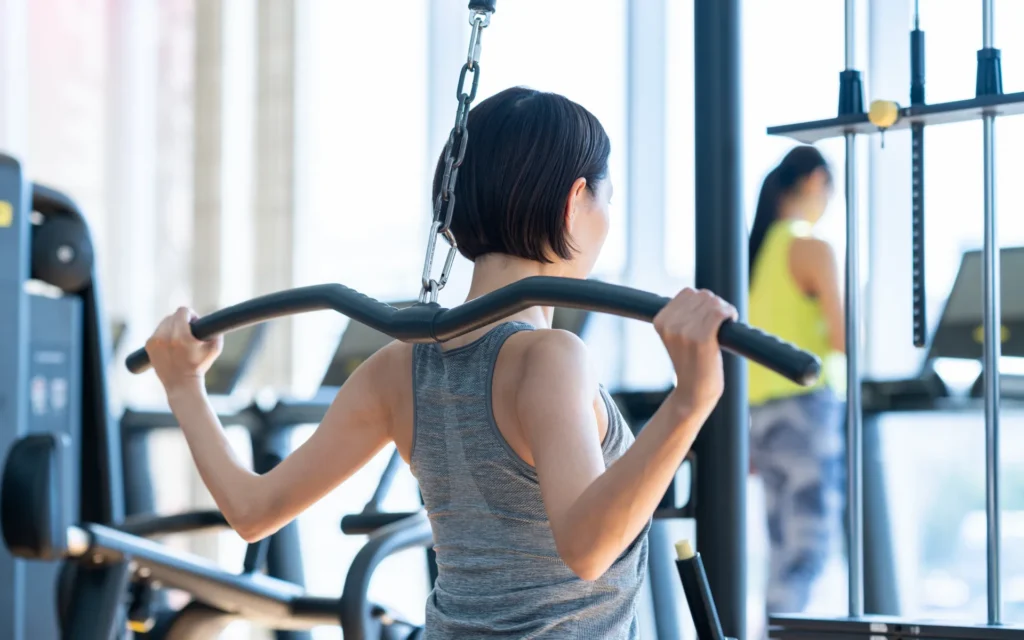
Weight training builds strength using resistance from dumbbells, barbells, or gym machines. It challenges muscles to work harder and grow. A key advantage is progressive overload, allowing you to increase weight steadily and target specific muscles precisely. This makes it ideal for those aiming to build muscle mass or enhance overall strength.
How do bodyweight and weight training differ?
How do bodyweight and weight training differ? Both build muscle strength and mass using resistance. The key difference is that bodyweight training uses your own weight and posture for resistance, while weight training relies on external weights or equipment, making it easier to adjust resistance levels precisely.
| Comparison Topic | Bodyweight | Weight Training |
| Source of Resistance | Body weight and gravity | Dumbbells, barbells, machines, or other equipment |
| Progression Method | Adjust posture, range of motion, tempo, reps, or stability | Increase weight, reps, sets, or adjust tempo |
| Training Goals | Strength, muscle mass, balance, and body control | Strength, muscle mass, power, and muscular endurance |
| Where to Train | Easy to perform in limited spaces | Train at home or the gym, depending on available equipment |
Which muscle groups can you target with bodyweight and weight training?
Both bodyweight and weight training can help develop muscles all over the body, but each has its own advantages, as follows:
- **Bodyweight training** works your entire body—from upper areas like the chest, shoulders, arms, and core, to lower parts such as legs and hips—using compound movements that engage multiple muscle groups at once. **Weight training** offers more precise targeting, allowing you to choose specific weights and exercises to focus on the exact muscles you want to develop.
The key point is that bodyweight and weight training can be done together — no need to pick just one. You can use bodyweight exercises to build a foundation, improve flexibility, and enhance body control, while combining them with weight training to boost strength and develop specific muscle groups.
What bodyweight exercises are there? A list of 10 basic moves you can start at home
There’s a wide range of bodyweight exercises to choose from, but you don’t need to train all of them. Just pick movements that target the major muscle groups adequately. The 10 exercises below are grouped by body part. You can select 2–3 per area to build a balanced training session.
For beginners, aim for 2–3 sets per exercise, with 8–12 reps each. Hold positions for 20–40 seconds, resting 45–90 seconds between sets. Adjust sets and reps based on your strength. If your form suffers, reduce reps rather than forcing full completion.
Bodyweight Lower Body Exercises (Legs and Hips)
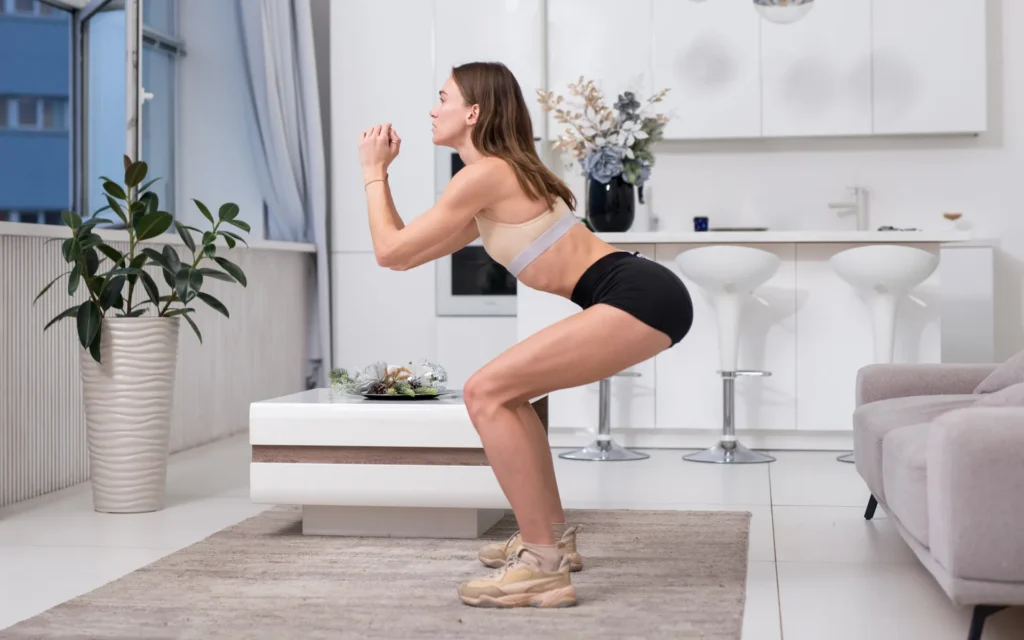
1. Bodyweight Squat Stand with feet shoulder-width apart. Lower your hips as if sitting back into a chair, keeping knees aligned with toes and back straight. Aim for thighs parallel to the floor without lifting heels. This is a foundational move. If you struggle with depth, practice sitting on a chair and standing up first.
2. Reverse Lunge Take a step back with one foot, lower your back knee until it almost touches the ground, then push back up. Switch sides. The reverse version places less strain on the knees than a forward lunge, making it a safer starting point for those with prior knee injuries.
3. Glute Bridge Lie on your back with knees bent and feet flat on the floor. Push your hips up until your body and thighs form a straight line, squeeze your glutes, hold briefly, then lower down. This is essential for those who sit all day, as glute muscles often remain inactive.
4. Step-Up Step onto a sturdy chair or stairs at knee height. Push up using only your top leg, avoiding any help from the bottom leg. Lower yourself slowly. Complete all reps on one side before switching.
**Upper Body Bodyweight Exercises (Chest, Shoulders, Back, Arms)**
5. Push-Up Place your hands slightly wider than shoulder-width apart, keeping your body in a straight line from head to heels. Lower yourself until your elbows bend to about 90 degrees, then push back up. If this is too tough, try an Incline Push-Up by placing your hands on a table or sofa edge. The higher the surface, the easier the exercise. Gradually lower the height as you build strength.
6. Pike Push-Up Start in a push-up position, then lift your hips up to form an inverted V shape. Lower your head towards the ground between your hands. This shifts the weight from your chest to your shoulders, making it ideal for those wanting to train their shoulders without dumbbells.
7. Table Row (Inverted Row) Lie flat beneath a sturdy table, grip the edge, and pull yourself up until your chest nearly touches it. This move is more crucial than you think. It’s the only exercise in this list that truly trains your back with a pulling motion. The back is often the weakest link in bodyweight training. Without a bar or table to pull on, your back muscles will barely engage throughout the entire routine.
Bodyweight Core Exercises
8. Plank Support yourself on your forearms and toes, keeping your abs and glutes tight so your body forms a straight line. Avoid sagging hips or lifting them too high. Time the hold instead of counting reps, and stop immediately once your form breaks. Holding for 20 seconds with perfect form is more effective than 60 seconds with a sagging back.
9. Dead Bug Lie on your back, lift arms and knees to 90 degrees. Extend one arm and the opposite leg outwards simultaneously, keeping your lower back pressed flat against the floor. It looks simple, but you’ll find it demands more core engagement than expected.
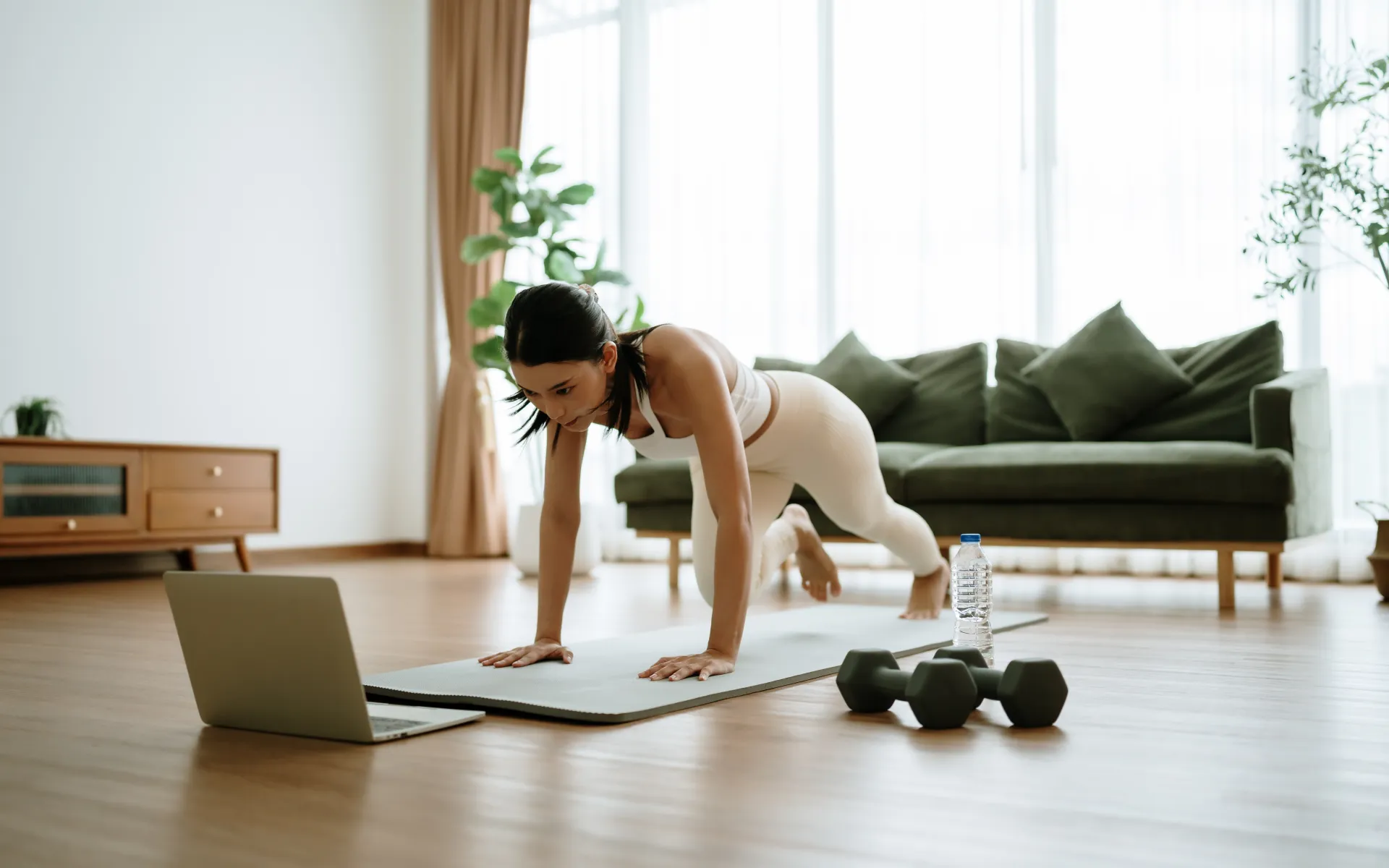
10. Mountain Climber Start in a push-up position, then rapidly alternate driving your knees toward your chest. This move combines cardio and core work in one go—ideal for finishing off your session.
How to Increase Weight Without Equipment
After practising for a while, the previously heavy positions should start feeling lighter. This is a good sign, but it also means it’s time to adjust.
The easiest way is to slow down your tempo by pausing for three seconds on the descent. This extends muscle engagement without adding extra steps. Next, increase the number of reps per set or make the angle more challenging. For instance, elevating your feet on a chair during a push-up shifts more weight onto your arms instantly.
Another overlooked method is reducing support points by switching from two legs to one. A standard squat that feels comfortable becomes a different challenge when performed as a split squat or Bulgarian split squat.
Bodyweight vs. Weight Training: What Are the Levels? Which Is Best for You?
Both training types offer a variety of levels and formats to choose from, whether you’re a beginner or someone with a solid physical foundation.
| Type | Difficulty | Best For |
| Basic Bodyweight | Easy | Beginners just starting out |
| Advanced Bodyweight (Pistol Squats, Pull-Ups/Muscle-Ups require a bar) | Hard | Those with a strong foundation and good body control |
| Free Weight Training (Dumbbells/Barbells) | Medium to Hard | People wanting to add weight and build muscle mass |
| Machine-Based Training | Easy to Medium | Beginners seeking safety and controlled movement |
What are the precautions for both types?
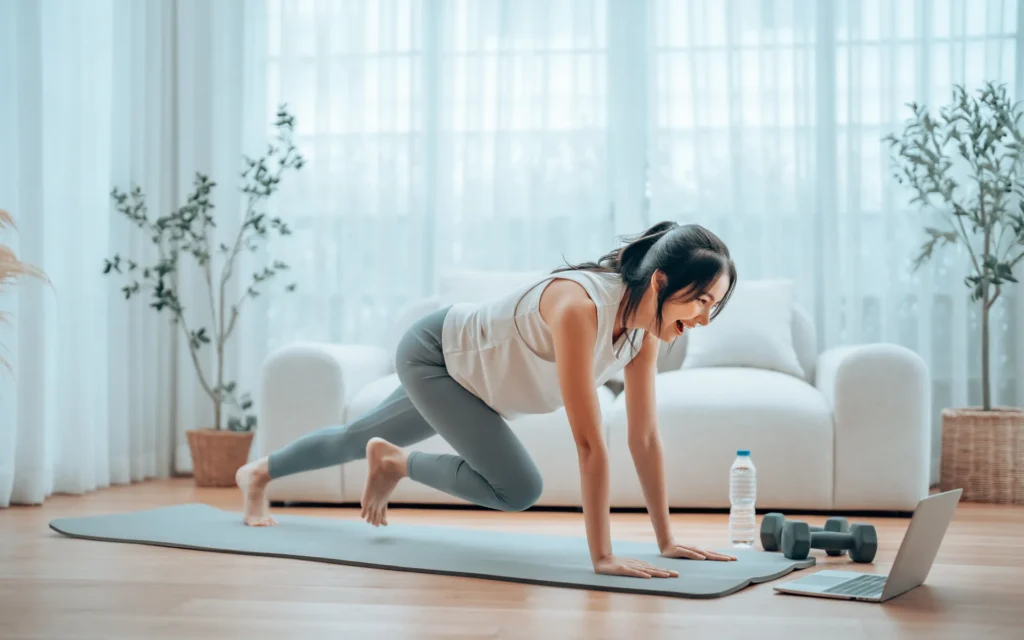
As previously noted, both training forms help boost strength. However, there are important precautions to keep in mind:
- Bodyweight exercises can lead to plateaus as the body adapts, limiting weight gains. Adjust techniques, increase reps, or add equipment to keep progressing. Weight training carries injury risks if form is poor or loads are excessive. Always start with manageable weights and perfect form before increasing intensity.
How do I insert both formats into the training software?
The best approach for beginners is combining bodyweight and weight training. Use bodyweight exercises for warming up and building a foundation, alongside light weights to boost strength. The 4-week mixed program below gradually increases load in a balanced way.
| Week | Frequency/Week | Workout Split | Focus |
| Week 1 | 2–3 days | Bodyweight only | Learn basic form |
| Week 2 | 3 days | 70% bodyweight + 30% light weights | Get used to equipment |
| Week 3 | 3 days | 50% bodyweight + 50% weights | Add slight weight |
| Week 4 | 3–4 days | 40% bodyweight + 60% weights | Test progress |
Note: The table above is for illustration only. You can adjust the ratio of bodyweight exercises and weight training based on available equipment, goals, and physical readiness. The WHO recommends that adults engage in strength training covering all major muscle groups at least two days per week, with rest days or muscle group rotation as needed.
How to Track Bodyweight Training Progress?
Tracking progress helps you see how far your body has come, whether it’s more reps and sets, increased training load, or better recovery. This data lets you adjust weights appropriately and avoid overtraining.
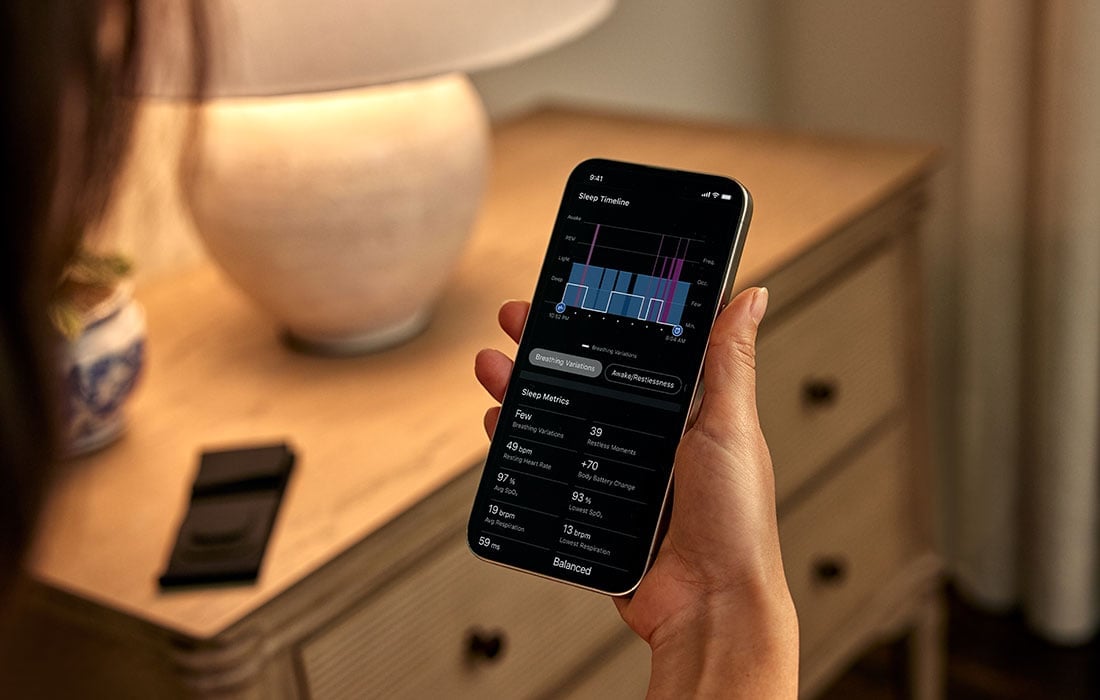
Tracking these numbers regularly makes progress clearer, especially with data-logging tools. This is vital for those combining Bodyweight Workouts and Weight Training. Many Garmin smartwatches, like the Garmin fēnix 9 Series, systematically log strength training, reps, and sets. The watch tracks reps once you hit at least four, counting one rep per pose per set. Switch poses only after finishing a set to start a new one. For static holds like Planks, it records time instead. It also includes a Training Readiness feature to assess daily physical readiness. This helps you decide whether to increase weight, maintain intensity, or prioritise recovery time.
Data from smartwatches serves as an estimate to help track trends. Users should verify their repetition counts and sets, alongside assessing actual feelings, pain levels, and joint form quality.
**Enhance your bodyweight training to get closer to your goals with Garmin**
Bodyweight training is the ideal starting point for anyone keen on looking after their physique without needing to wait for gym equipment. As your body grows stronger, adding weight training will help elevate your strength and muscle mass. Stick to a structured plan, gradually increase the challenge, and listen to your body’s signals regularly. Consistent effort guarantees visible results.
Great training isn’t just about how many reps you do, but also understanding where your body is heading. Garmin Smartwatches help those doing bodyweight workouts and weight training by systematically tracking exercise data and strength metrics. This lets you plan each session with confidence and clearly see your progress.
**Frequently Asked Questions**
Q: Can bodyweight exercises really help reduce belly fat?
A: Bodyweight exercises boost energy expenditure and help build or maintain muscle mass, aiding overall fat loss when practiced regularly alongside a balanced diet.
Q: Can bodyweight training really build muscle?
A: Bodyweight training really builds muscle. Research shows that working with light loads (under 60% of your 1RM) to near failure yields muscle growth similar to heavy weights. However, max strength still requires heavier loads. So, bodyweight is great for hypertrophy, while weightlifting excels for peak strength.
Q: Will strength training make women bulky?
A: Women can build muscle through weight training, but the degree of body change depends on training volume, nutrition, genetics, and consistency. General fitness programmes typically improve strength and tone, while significant muscle growth requires a continuous, specially planned training and nutrition regimen.
Q: Is home bodyweight training actually effective?
A: Home bodyweight training really works, especially with a consistent programme and gradually increasing challenge by adjusting tempo, reps, or angles.
Q: Should you start with bodyweight exercises before lifting weights?
A: It’s best to start with bodyweight exercises or gym machines before moving on to free weights. This approach helps you control movement direction and refine your form, reducing injury risks during workouts.
Q: How many calories does a 30-minute bodyweight workout burn?
A: A 30-minute bodyweight workout burns roughly 135–190 kcal at moderate intensity, and 240–340 kcal when intense, for those weighing 57–84 kg. Actual figures depend on exercise intensity, rest periods, and training format.